
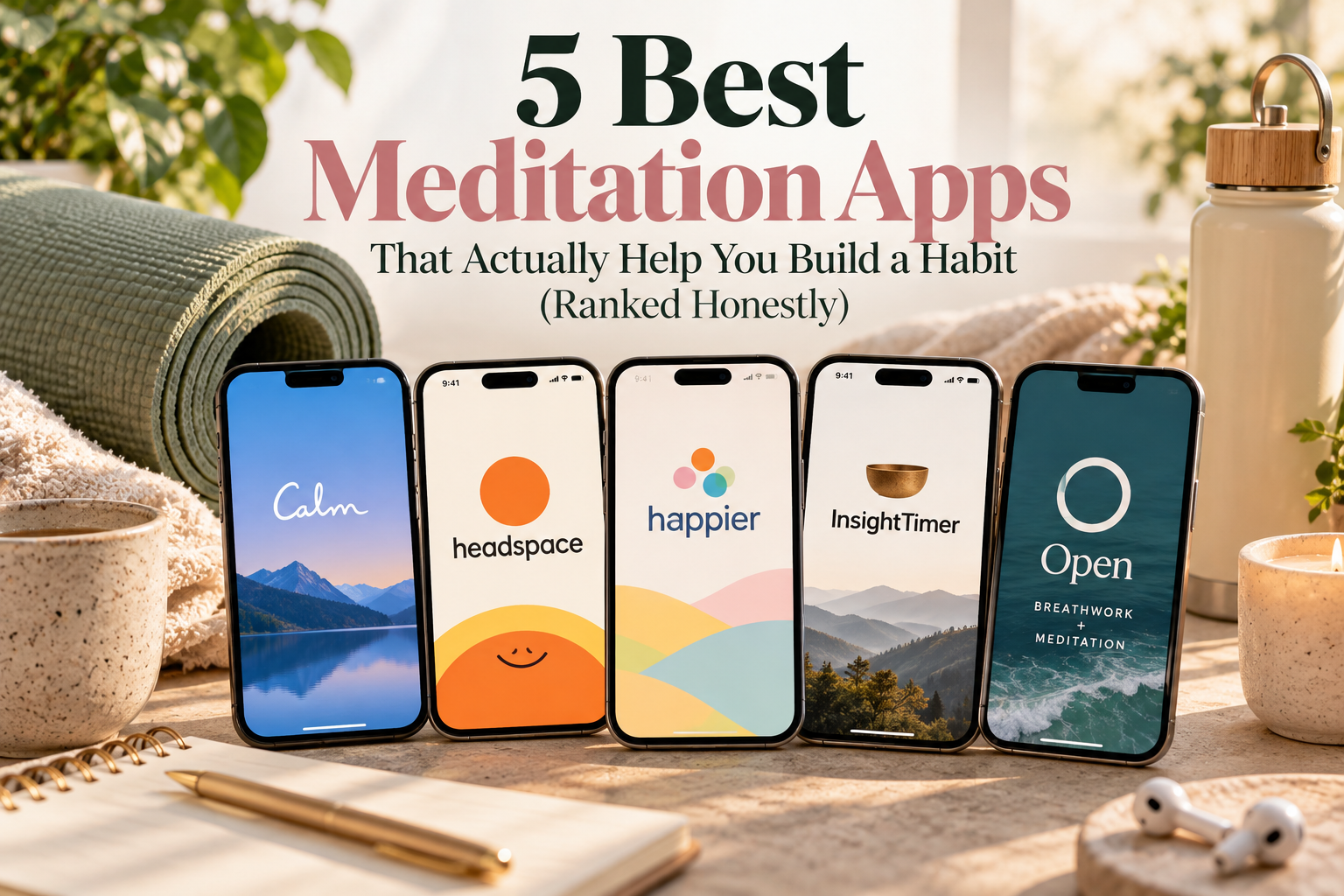
Meditation has seen a meteoric rise in popularity in the United States. It originated in the Indus Valley region among shamanic religions and has been used in Buddhism as a way to reach enlightenment. However, meditation doesn’t have to be religious, and meditation has been studied on a secular level as one of the best self-care regimens. Luckily, the best meditation apps also make these benefits more accessible than ever before. When you have one of the best meditation apps, you can partake in guided meditation from the comfort of your home, making it easier to build a sustainable habit.
Meditation can be surprisingly difficult to turn into a routine, especially when you’re busy or aren’t sure what you’re supposed to be doing once you sit down. Some people want quick breathing exercises between meetings, while others prefer longer guided sessions, sleep meditations, or structured programs that give them somewhere to start each day. That’s why the best meditation apps aren’t necessarily the ones with the biggest content libraries. The experience needs to make you want to come back.
We’ve looked at the features that matter when you’re trying to make meditation part of everyday life, including ease of use, session variety, habit building tools, guidance for beginners, cost, and overall value. Whether you’ve never meditated before or you’ve downloaded several apps without sticking with any of them, this honest ranking of the best meditation apps can help you find one that fits the way you’ll actually use it.
If you’ve spent any time at all researching self-care, you’re likely aware just how many meditation apps exist. Sorting through the features of each one often proves overwhelming. Fortunately, we’ve compiled a list of the best meditation apps and ranked them for you so you don’t have to overthink your choice!
5 Best Meditation Apps That Actually Help You Build a Habit (Ranked Honestly)
1. Calm
Just like its name, Calm harnesses the power of meditation to bring about more peace and less stress. Filled with short meditations, it’s perfect for those who are just starting to build the habit. In addition, it features celebrity-narrated sleep stories, giving you the comfort of familiar voices as you drift off. The app also features mindful movement videos that bring you into your body and help you enjoy and appreciate your body.
While the Calm app has a beautiful design, some users find the sheer amount of content a little overwhelming to wade through. If you would like to see if it’s right for you, you can sign up for the free trial. After 7 days, it’s $79.99 per year, plus taxes.
2. Headspace
Headspace (available through Apple) remains one of the best meditation apps for beginners. Co-founded by Andy Puddicombe, a former Tibetan Buddhist monk, it makes the ancient and religious art of meditation both accessible and secular. It uses friendly animations that make learning the process of meditating enjoyable, and it features highly-trained meditation experts who help you through the process. Headspace also has short meditations that are perfect for those who aren’t used to meditating for a long time.
However, Headspace goes far beyond a meditation app. It also provides you with access to other mental health resources, such as licensed therapists, expert-led programs, and even sleep assistance. Scientific research on Headspace’s effectiveness has established it as one of the strongest apps in the business, with one study noting a 46% reduction in depression after Google and Roche employees used the app for 8 weeks.
3. Happier Meditation
One of the number 1 reasons people don’t meditate boils down to not feeling as if they have enough time. If you hear “meditation,” think of someone who gets up before the sun to sit for an hour in the lotus pose, and then think, “I could never have time for that,” you’re not alone. Very few people have the luxury to meditate for hours, and the people behind the Happier Meditation app available through Apple believe that shouldn’t stop you from living a mindful life.
Happier Meditation, which you can get through Apple, stands out as one of the best meditation apps for its unwavering commitment to meeting you where you’re at and showing you how to sprinkle meditation and mindfulness into your day. On the app, you can decide how long you want to meditate, and you’ll receive monthly check-ins. If you’re looking for a meditation app that helps you build a practice around your existing schedule, this is it!
4. Insight Timer
As with all aspects of the mental health industry, affordability stands as one of the biggest barriers for most people. While the apps listed above provide excellent meditation resources, they come with a price tag. Some people who experience the most stress and anxiety, and therefore could benefit from meditation the most, find that their mental health challenges stem from financial challenges. As such, no article about the best meditation apps would be complete without mentioning an app that helps people connect to resources regardless of their finances.
Insight Timer, available through Apple, has made a name for itself in the meditation app space for its expansive library of free guided meditations. With over 360,000 titles, it boasts the largest collection of meditations in the world, and they’re all available on the app without you having to spend a dime. The app targets sleep and anxiety and allows you to choose your preferred meditation length!
Related: Chronic Fatigue Explained: How 5 Small Lifestyle Changes Help
5. Open: Breathwork + Meditation
Most of the best meditation apps focus primarily on meditating. However, breathing also regulates anxiety and stress, so some people find that doing breathwork and meditating together helps them achieve their mental health goals more efficiently. Breathwork isn’t just breathing, though. Instead, it’s breathing in a variety of ways that calms down your nervous system.
Open: Breathwork + Meditation, available through Apple, stands out among the best meditation apps for its focus on breathwork as a tool in meditation. The app teaches you down-regulating breathing techniques to add extra power to your meditation practice and enables you to use them in a daily setting. Even better, it also teaches you up-regulating breathing techniques, which help you feel more alert without needing to rely on substances such as caffeine.
What Are the Benefits of Using a Meditation App?

The biggest benefit of a meditation app is convenience. Instead of figuring out how to meditate on your own, you can open an app, choose a session, and follow along wherever you happen to be. The best meditation apps can also remove some of the uncertainty that makes starting meditation intimidating, particularly when you’re still learning what different techniques involve.
There’s another practical advantage that shouldn’t be overlooked: variety. You might want a five minute meditation before work one day and a longer guided session before bed the next. The best meditation apps give you options for different schedules, experience levels, and meditation goals without requiring you to search for a new resource every time.
Using an app doesn’t guarantee that you’ll develop a consistent meditation practice, but the right features can make the process easier. Guided sessions, structured programs, reminders, and progress tools are some of the reasons the best meditation apps can be useful when you’re trying to turn an occasional meditation into something you do regularly.
Meditation Apps Make Guided Sessions More Accessible
Guided meditation gives you a voice to follow instead of leaving you to sit quietly and wonder whether you’re doing something wrong. This can be particularly helpful for beginners who haven’t learned how to direct their attention, work with their breathing, or respond when their thoughts wander.
Having those sessions available on your phone also means you aren’t limited to meditation classes or a particular location. You can practice at home, during a quiet break, while traveling, or anywhere else you feel comfortable.
Short Sessions Can Fit Into Busy Schedules
You don’t necessarily need a large block of free time to begin developing a meditation routine. Many apps include sessions that last just a few minutes, which makes it easier to find an opening in an otherwise packed schedule.
A shorter session can also feel less intimidating when you’re trying to establish the habit. Committing to five or ten minutes may feel much more realistic than deciding you’ll meditate for half an hour every morning, particularly when meditation is still new to you.
Structured Programs Can Help Beginners Learn
Opening a massive meditation library can leave a beginner wondering where to start. Structured programs solve some of that problem by providing a sequence to follow rather than asking you to choose a completely different meditation every day.
These programs can also introduce techniques gradually. Instead of trying to understand everything at once, you can become familiar with concepts such as breathing, awareness, focus, and observing your thoughts through repeated practice.
Meditation Apps Can Help You Track Your Practice
Some meditation apps record details such as how often you meditate, how many sessions you’ve completed, or how much time you’ve spent practicing. Seeing that history can make it easier to understand your own routine.
Tracking should remain a tool rather than the entire reason you meditate. Missing a day doesn’t erase the sessions you’ve already completed. If a streak starts making meditation feel like an obligation, focusing on overall consistency may be more useful than trying to maintain a perfect record.
What Is the Best Time of Day to Use a Meditation App?
There’s no single best time to meditate that works for everyone. The most useful time is usually one that fits your schedule well enough that you can return to it consistently. The best meditation apps make this easier by offering different session lengths and meditation styles for various parts of the day.
Your reason for meditating can influence the timing, too. Someone who wants a calmer start to the morning may choose a different session than someone using meditation to transition out of a stressful workday. When comparing the best meditation apps, look for enough variety that you can adjust your practice when your routine changes.
Consistency matters more than forcing meditation into a time slot that doesn’t work for your life. Experimenting with morning, midday, evening, and bedtime sessions can help you discover when meditation feels most natural. Once you find that window, the best meditation apps can give you a convenient way to make the practice part of your usual routine.
Morning Meditation
Morning can be a convenient time to meditate because fewer parts of the day have had a chance to compete for your attention. A short guided meditation after waking up, drinking your coffee, or getting ready can also connect the practice to something you already do each morning.
Meditation During a Work Break
Meditation doesn’t have to happen at home. A short session during lunch or another work break can give you a defined pause between tasks, particularly if you’ve spent several hours moving quickly from one responsibility to another.
Evening Meditation
Evening meditation can create a transition between the demands of the day and your personal time. If mornings tend to be rushed, an evening session may simply be easier to maintain.
Meditation Before Bed
Some people prefer to meditate as part of their bedtime routine. Apps such as Calm and Headspace include content designed around relaxation and sleep, making this an especially practical option if you already use your meditation app in the evening.
Related: Why You Wake Up Anxious: Morning Anxiety Causes and How to Calm Them
Can Meditation Apps Actually Help You Meditate Consistently?
Yes, meditation apps can make consistency easier for some people, particularly when they reduce the effort required to start a session. Instead of deciding what type of meditation to do, how long to practice, and what technique to use every time, you can open an app and follow a guided session. The best meditation apps also include features designed to encourage repeat use, such as reminders, programs, saved sessions, and practice tracking.
Those features won’t create the habit for you. An app that’s cluttered, frustrating, expensive, or filled with content you don’t enjoy may actually make you less interested in returning. This is why our ranking of the best meditation apps considers usability and habit building alongside the amount of meditation content available.
The goal is to find something that makes meditation easier to repeat in your real life. For one person, that could mean a five minute guided session every morning. Someone else may prefer a longer evening practice a few times each week. The best meditation apps give you enough flexibility to create a routine you can realistically maintain instead of making meditation feel like another item on your list.
Do Meditation Reminders Actually Work?
A reminder can be useful when forgetting is the main reason you skip meditation. Setting one around a time when you’re normally available can provide a simple cue to practice.
Constant notifications can become easy to ignore, though. If you repeatedly dismiss your meditation reminder because it arrives during dinner, your commute, or the busiest part of your morning, changing the timing may be more helpful than adding even more notifications.
Are Meditation Streaks Helpful?
Streaks give some people a visible sense of progress. Watching several days of meditation add up can make a new routine feel tangible and provide a little extra motivation to continue.
They won’t work equally well for everyone. A streak can become discouraging if missing one session makes you feel like you’ve failed. Meditation is still valuable even when your practice isn’t perfect, so consider your overall consistency rather than allowing one missed day to determine whether you continue.
Can Guided Meditation Help Beginners Stay Consistent?
Guided meditation can make consistency easier because beginners don’t have to plan every session themselves. An instructor provides direction, introduces techniques, and gives you something to return your attention to when your mind inevitably wanders.
This can also make meditation feel less intimidating during the first few weeks. Instead of questioning whether you’re doing it correctly, you can focus on following the session and becoming comfortable with the practice.
When Should You Stop Relying on Guided Meditation?
You don’t have to stop using guided meditation simply because you’ve gained experience. Some people continue using guided sessions for years because they enjoy the structure, while others eventually become interested in meditating without instruction.
If you’d like to try independent meditation, start gradually. You might alternate guided and unguided sessions or use an app’s timer when you want to practice on your own. Becoming less dependent on guidance doesn’t need to be treated as a milestone you have to reach. What matters more is whether your approach helps you maintain a meditation practice that feels useful and sustainable.
Related: Overthinking Detox Guide: Clear Your Mind in 3 Steps
Applying Meditation to Everyday Life

Meditating one time can have a positive impact on your stress levels for the day and help you recenter your focus on what really matters. However, to receive the prolonged benefits of meditation, you’ll need to make it a consistent habit that you weave into your life. As with all habits, establishing a meditation routine that works for you takes time and effort that will eventually become easier as you proceed through your journey.
When it comes to the best meditation apps, features still matter, obviously, but your ability to stick with the experience matters more. Guided programs can give beginners direction, reminders can help when meditation slips your mind, and shorter sessions make it easier to practice when life gets busy. The best meditation apps balance those practical tools with content you’ll actually enjoy using, whether you’re interested in mindfulness, relaxation, focus, stress management, or better sleep.
Don’t feel pressured to choose an app simply because it’s the most recognizable name or offers thousands of sessions. Pay attention to how easily meditation fits into your routine once you start using it. The best meditation apps should make returning to your practice feel approachable rather than burdensome, helping you spend less time searching for the perfect wellness routine and more time actually building one you can keep.
The best meditation apps listed above will serve as powerful tools as you incorporate meditation into the fabric of your daily life. Remember, using the best meditation apps for a little every day is better than using them for a long time at once and never touching them again! Here’s more advice on how to build a stress-resilient routine!
Read Next: Apple Cider Vinegar Detox for Men: What Actually Happens When You Try It for 30 Days






 Dive into insightful articles on health and wellness, nutrition, fitness, mental serenity, and so much more.


