

Let’s face it: we all wish parenting came with a handbook that gave us the cheat codes for raising kind, healthy children. In reality, no such manual exists, but we do have the work of many scientists to draw on. Fortunately, people have been researching children for over a century now, and many child development theories exist.
Here are some of the most evidence-backed ones, which we’ll discuss in detail below:
- Piaget’s Theory of Cognitive Development
- Vygotsky’s Sociocultural Theory
- Attachment Theory
What Are the Child Development Theories?
Piaget’s Theory of Cognitive Development

Jean Piaget was a Swiss psychologist whose keen interest in the intellects of children yielded one of the longest-lasting child development theories. Piaget’s theory arose from observing children, including his own, and the ways they behave.
Out of his research, Piaget formulated 4 stages of development:
- Sensorimotor stage (ages 0-2) – Children in the sensorimotor stage learn about the world around them through their senses and movement. During this stage, children become aware of cause and effect. For example, they learn that if they hit a bell, it rings. The objective of this stage involves learning object permanence, which is the knowledge that items and people exist even when you can’t see them.
- Preoperational stage (ages 2-7) – When your child is in the preoperational stage, they will start participating in make-believe play. In addition, they develop a stronger memory and ability to imitate. Their main goal in this stage involves using symbolic thought, which means they can play at being someone they’re not, such as a princess or a firefighter. At these ages, children can’t understand that other people think in a different way than they do.
- Concrete operational stage (ages 7-11) – In this stage, children begin to understand that other people may have different opinions and thoughts than they do. The main goal is operational thought, which involves the ability to use logic and solve problems. Also, they start to master the art of conversation.
- Formal Operational stage (ages 12 and beyond) – For the rest of their childhood, children have the main task of understanding abstract concepts. If you ask a child younger than this to answer an abstract question, they’re likely to answer concretely. At the formal operational stage, children also develop an understanding of morality, beauty, and abstract theories.
Vygotsky’s Sociocultural Theory
The Soviet psychologist Lev Vygotsky believed in the role of society and culture in the development of children. Although his research was based on Russian children in the 1920s and 1930s, much of his theory holds weight regardless of the person’s sociocultural basis.
Through his research, Vygotsky concluded that adults influence the cognitive development of children by introducing them to different challenges. They also help them develop reasoning and communication. Vygotsky also upheld the belief that children learn through engaging in play with other people.
In a famous example, Vygotsky cited the common incident of children playing with blocks. As they play, they learn about concepts such as gravity and different ways to move items around.
Vygotsky also introduced the Zone of Proximal Development (ZPD), a key construct for educators and those involved in the child development profession. According to Vygotsky, the ZPD consists of concepts that children find achievable based on what they’ve already learned. Outside of the ZPD, there are ideas that kids can’t understand yet, even with help, and ideas that they already know. Inside the ZPD, children at first need an adult’s assistance before they move on to mastering something on their own.
Attachment Theory
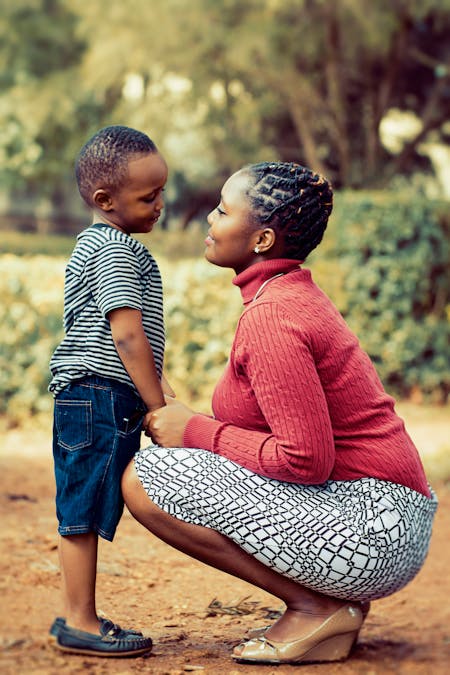
John Bowlby’s Attachment Theory provides one of the key predictors of relational success in both childhood and adulthood. Bowlby believed that infants experience extreme sensitivity to the responses of their caregivers. After all, these individuals become necessary for the child’s survival and safety.
Attachment begins as soon as a child arrives in the world. When children cry, and their caregiver responds by soothing them and caring for their needs, the child learns that the world is a safe place where their needs will be met. However, if the caregiver expresses an inconsistent response to the child’s cries, the child internalizes that expressing their needs won’t always result in someone taking care of them. They learn that the world is an insecure place.
Most people carry these things they learn
In general, there are 4 different types of attachment that children can form:
- Secure attachment – When the caregiver is responsive to a child’s needs and stays emotionally available, the child will likely develop this attachment style. Securely attached people generally express comfort in close relationships and an ability to regulate their emotions. These people also experience comfort when they’re alone, have higher self-esteem, and possess an improved ability to handle conflict.
- Anxious attachment – Anxiously attached people demonstrate fears of abandonment and rejection. They also depend on a partner for their emotional regulation and validation. This type of attachment comes about when parents don’t meet a child’s needs, become easily overwhelmed, or change between detachment and coddling the child. Through this, the child learns that their caregivers are inconsistent in their attention, and they come to crave parental attention.
- Avoidant attachment – People who experience this attachment often struggle to form close, long-term relationships. If others try to get close to them, they may retreat or withdraw. However, we must note that these people often still want close relationships. In fact, if people begin to pull away from them in reaction to their withdrawal, they may attempt to invest in the relationship again. This attachment style comes about when parents expect children to be independent or leave them to fend for themselves when they cry.
- Disorganized attachment – Those with this attachment demonstrate aspects of both anxious and avoidant styles. Usually, they have trouble regulating their emotions, express contradicting behaviors, and possess high anxiety. This attachment style is often experienced by those who have abusive childhoods, undergo neglect, or have trauma in their pasts.
Assistance with Parenting
Unfortunately, parenting a child is never easy, and even child development theories probably won’t fully explain your child’s behavior all the time. If you need help with parenting, we highly recommend seeking out professional counseling. Mental health therapists receive high-level training in human development and can guide you toward parenting that’s best for you and your child.
In addition, it’s important to note that researchers inspected many of these attachment theories using neurotypical children. Children with neurodiverse conditions, such as ADHD, autism, or OCD, might have different developmental milestones and needs. These children may benefit from seeing a counselor and/or psychiatrist as they learn to navigate the world and establish a positive sense of self.
Keeping Yourself Healthy
Even when you use child development theories, taking care of your mental health while you parent sometimes proves difficult. As a parent, make sure you’re taking adequate time for your self-care to avoid compassion fatigue and seek help from your community when needed. We also have other articles on parenting if and when you need them!







 Dive into insightful articles on health and wellness, nutrition, fitness, mental serenity, and so much more.

