
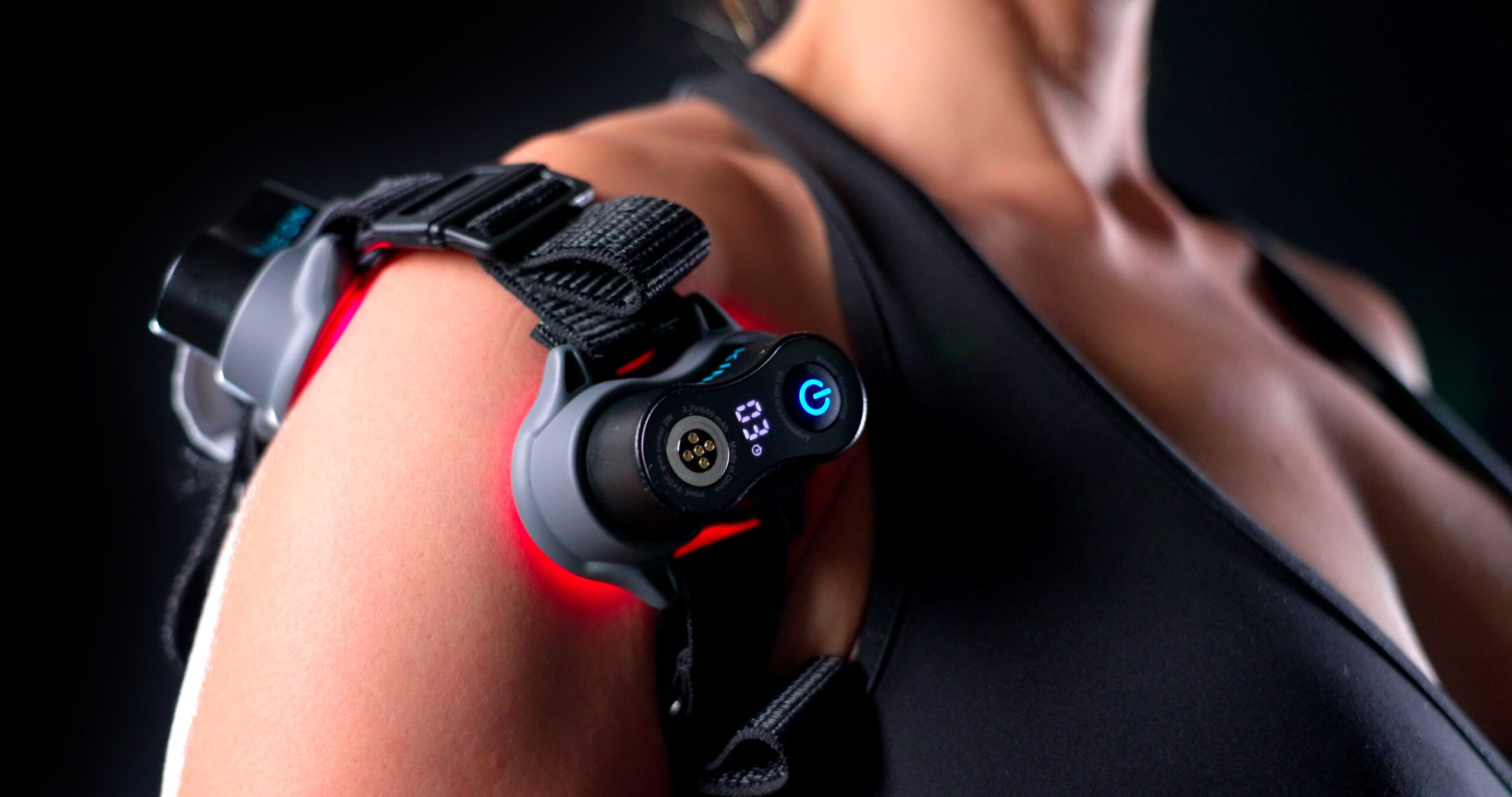
A plain-English look at why so many joint-pain fixes only ever buy you a few good weeks — and the technology a growing number of people are using at home instead. This article is sponsored content. It’s based on the latest available information at the time of publication and cannot replace personalized, professional care. Please consult your physician before making changes that impact your health. We hope you love the products we recommend — just so you know, Vitality Views may collect a share of sales or other compensation from the links on this page.
Can we be straight with you about the brace in your closet?
If your knees ache going up the stairs, stiffen up after you’ve been sitting too long, or quietly remind you they’re there every time you get comfortable at night — you’ve probably already tried a few things. Ibuprofen. A compression sleeve. Maybe a cortisone shot, or a stretch routine you found online. And for a while, each one helped a little.
Then it came back.
That’s not bad luck, and it isn’t because you didn’t try hard enough. It’s because most of the everyday fixes for joint pain were built to do one thing: quiet the alarm. They’re very good at turning down the signal for a few hours. None of them were designed to reach the place the pain is actually coming from.
The part no one explains: why it keeps switching back on

Picture a smoke alarm going off because there’s a small fire in the next room. Ibuprofen is the equivalent of pulling the battery out of the alarm. The room goes quiet — but the fire is still burning. The moment the pill wears off, the alarm starts up again, because nothing ever dealt with the source.
Inside an aging or overworked joint, that “fire” is low-grade inflammation in the tissue, and cells that are struggling to keep up with repair. The cushioning and lining inside your joint take on more wear than your cells can fix, so the inflammation never fully switches off. A brace supports the joint from the outside. A painkiller mutes the signal. A stretch loosens the muscles around it. Useful — but they’re all working around the joint, not inside it, where the problem lives.
What “things you can do at home” actually means now
The good news is that the at-home options have moved well beyond heat packs and hoping. Alongside the basics that genuinely help — gentle movement, staying hydrated, not sitting frozen in one position for hours — one category has earned a lot of attention for a specific reason: it’s aimed at the cellular layer the other approaches never reach.
It’s called red light therapy, or photobiomodulation if you want the technical term. Here’s the simplest way to think about it.
Your cells run on a battery. That battery is charged by tiny structures inside them called mitochondria, which produce the energy (ATP) your cells use to repair themselves. When a joint is inflamed and overworked, those cellular batteries are effectively running low — so repair stalls. Specific wavelengths of red and near-infrared light act like a charger for those cells: the light is absorbed by the mitochondria, which helps support the energy production the body uses for recovery and circulation. A plant turns light into growth; this gives tired cells in a sore joint more of the energy to do their own repair work.
That’s the difference that matters. Instead of masking the signal, this approach is aimed squarely at the layer underneath it.
Why the device matters — not all red light is the same

This is where most people get tripped up, so it’s worth slowing down.
A cheap red-light panel is a bit like a household flashlight: the light spreads out and fades before it gets anywhere near the joint. A focused laser is more like a tight beam that actually reaches down into the tissue. The Kineon MOVE+ Pro was built around exactly this distinction — it combines 660nm LED light, which works nearer the surface, with 808nm laser light, an invisible wavelength that, according to Kineon’s research, can reach roughly two to three inches into the body — deep enough to target the joint itself, not just the skin over it.
It’s also wearable, which sounds like a convenience detail but is really a consistency feature. You strap it around a knee, shoulder, elbow, wrist or ankle and get on with your morning coffee, a work call, or an episode of something. The technology only does its job if you actually use it, and you’re far more likely to use something that fits into the ten minutes you already have than a panel you have to sit in front of.
What’s realistic — and what isn’t
Worth saying plainly: this is not a pill, and it isn’t instant. The honest picture is a build, not a switch. Used daily and consistently, many users report the first changes feeling like a little less morning stiffness within the first couple of weeks, with comfort and mobility tending to build over the following one to three months. Skip days and you’re charging a battery that keeps draining. Consistency is the whole game.
It also isn’t a cure, and you should be skeptical of anyone who tells you otherwise. What it is is a drug-free, non-invasive option that’s grounded in a large and growing body of science — more than 9,000 studies now reference red and near-infrared light therapy — and it’s the same category of technology used by physiotherapists, now built into something you can use at home.
A low-risk way to try it

If you’ve been let down before, the sensible way in is to make the trial cost you as little as possible. Kineon backs the MOVE+ with a 30-day money-back guarantee, so you can use it daily for a month and send it back if it isn’t doing anything for you — the risk sits with them, not you.
For readers here, the code VITALITY takes $50 off your total order, and it stacks on top of any promotion already running on their site. Plus, from now through September 8, receive a special Labor Day offer of $250 off the MOVE+!
→ See how the Kineon MOVE+ Pro works and read the research
Read Next: How Does Red Light Therapy Work For Health and Wellness?





 Dive into insightful articles on health and wellness, nutrition, fitness, mental serenity, and so much more.

